Medical Anatomy Vector Set
A Designer’s First Look: Clean, Confident, and Quietly Clever
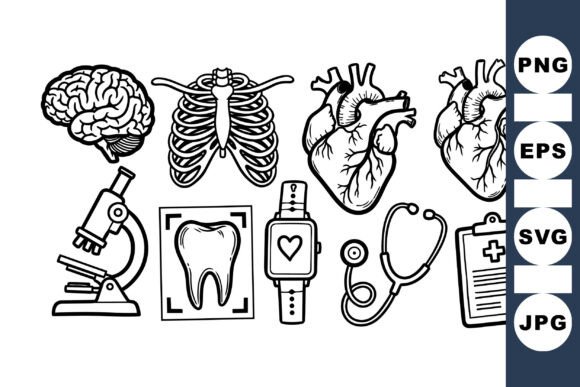
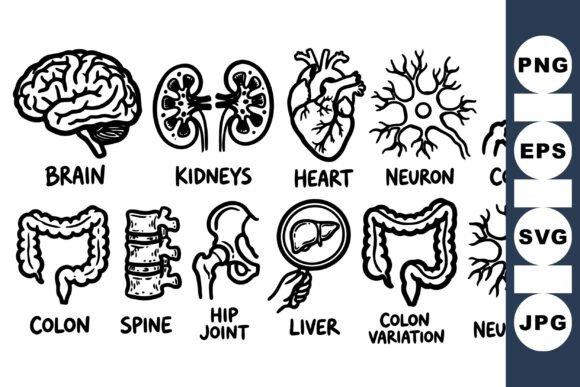
Opening the Medical Anatomy Vector Set, I didn’t see clipart—I saw intention. These aren’t generic silhouettes copied from a textbook; they’re hand-drawn organs and neurons rendered in bold, confident monochrome lines—like something sketched by a med student who also studied graphic design. The labeling is integrated, not tacked on: subtle but legible, balanced within the shape itself. It feels educational without being clinical, artistic without sacrificing accuracy. That balance matters—especially when you’re turning it into a stitched product.
Where This Design Naturally Lands (and Why It Sells)
I recently used one of the labeled heart + circulatory system motifs for a custom embroidered tote bag bound for a local clinic’s wellness fair. Not as decor—as utility. Nurses grabbed them instantly. Why? Because the design communicated competence and care at a glance. No cutesy hearts, no cartoon veins—it’s grounded, respectful, and quietly authoritative. That same motif worked beautifully on a lightweight cotton apron for a boutique pharmacy’s staff gift set. On baby onesies? I chose the simplified neuron outline—small, soft, and symbolic rather than literal. Parents responded to its quiet intelligence, not just novelty.
The Medical Anatomy Vector Set thrives where meaning meets minimalism: embroidered patches for medical school grads, pillow covers for neurology residents, tea towels for science teachers, caps for lab techs, or even holiday gifts for pharmacists and physical therapists. It fits small business branding—think Etsy listings for “anatomy-inspired handmade goods” or craft fair booths with curated, thoughtful merchandise. It doesn’t shout. It invites recognition, then respect.
What Holds Up Under Needle—and What Needs Extra Care
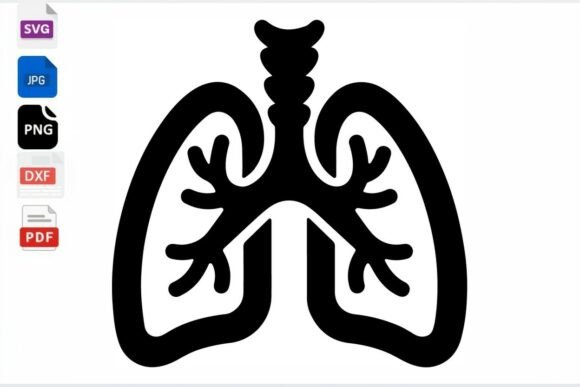
As a machine embroidery designer, I tested three variations across fabric types: the full lung illustration (moderate detail), the labeled brain stem (tight curves and fine labels), and the standalone neuron (clean lines, open negative space). Here’s what stood out:
- Stitch clarity shines on stable, medium-weight fabrics—cotton twill, canvas tote bags, midweight sweatshirt fleece. The bold line style translates cleanly into satin stitch outlines and well-defined fill areas. No pixelation, no ambiguity.
- Small hoop sizes (under 4”) demand selective use. The labeled versions include text that reads clearly at 3.5” wide—but drop below that, and lettering risks becoming indistinct. For caps or baby hats, I’d choose the unlabeled organ silhouettes or simplify labels manually before digitizing.
- Textured or stretchy fabrics need stabilizer strategy. On ribbed knit sweatshirts, I layered tear-away + cut-away stabilizer and reduced stitch density slightly—especially around curved edges like the kidney outline. Without it, the bold lines softened unpredictably.
- Dark fabric? Lean into contrast. I ran test stitches in white and light gray thread on navy canvas—both worked, but white gave crisper definition. Avoid pale pastels on dark backgrounds unless you’re aiming for subtlety over legibility.
- Frequent washing? Prioritize satin over dense fill. The neuron design, with its open structure, held up better after three cold washes than the fully filled heart—less thread bulk, less friction, less wear.
Design Assets That Build Trust—Not Just Aesthetics
When your customer sees a professionally stitched, clearly labeled anatomy motif on a handmade product, they don’t just see craftsmanship—they infer expertise. That matters for Etsy sellers listing “medical-themed embroidered gifts” or small shops curating science-literate merchandise. The Medical Anatomy Vector Set supports brand consistency: whether you’re selling digital embroidery files or finished products, its cohesive line weight and visual language make your offerings feel intentional, not pieced together.
It also raises perceived value. A plain embroidered heart sells—but an accurately proportioned, labeled heart with stylized coronary arteries? That signals research, care, and attention. Customers pay more for that nuance. And yes—it boosts giftability. I’ve shipped these as graduation presents, new job tokens, and “thank you” gifts for mentors. Recipients consistently comment on how “thoughtful” and “uniquely personal” the imagery feels—even when it’s not customized beyond placement.
Practical Notes Every Embroidery Designer Should Run Through
Before cutting thread or uploading to your machine:
- Test the Medical Anatomy Vector Set on scrap fabric matching your final project’s weight and stretch.
- Check thread color contrast—not just on white, but on your actual base fabric (e.g., oatmeal linen, charcoal fleece).
- Review stitch density: high-fill areas may benefit from slight reduction on delicate or textured surfaces.
- Confirm hoop size compatibility—especially if using labeled variants on curved items like caps or baby bonnets.
- Inspect small details in black-and-white mockups: does the label legibility hold? Does the neuron’s branching stay distinct?
- Use appropriate stabilizer—cut-away for knits, tear-away for stable wovens, and consider topping for napped fabrics like terry cloth towels.
- Verify licensing terms before selling finished products or reselling the digital embroidery file. This is a Graphics asset intended for Crafts use—but commercial rights must be confirmed directly with the creator.
Final Thought: Not Just Anatomy—An Attitude
The Medical Anatomy Vector Set isn’t about stitching organs. It’s about stitching *intention*. It suits makers who believe their craft carries meaning—not just decoration. Whether you’re an Etsy seller building a niche around science-inspired handmade products, a small shop owner sourcing distinctive boutique embroidery, or a hobbyist embroidering a meaningful gift for someone in healthcare, this set gives you clarity, credibility, and quiet confidence. It doesn’t try to be everything. It does one thing very well—and that’s exactly why it works.